
Have you ever travelled to a foreign country only to find out that none of the inhabitants of that country speak English? How annoying is that?
Today’s post and subsequent video topic was inspired by a livestream I watched between Azren the Language Nerd and Matt and Abigail from Polyglot Progress. To sum up, at one point in the livestream, the topic of monolingualism came up as well as the idea of an “international language”, and it got me thinking.
Primarily, I wanted to answer two questions: should there be one single international language for the entire world? Secondly, should that international language be English? Let’s explore!
The History of English
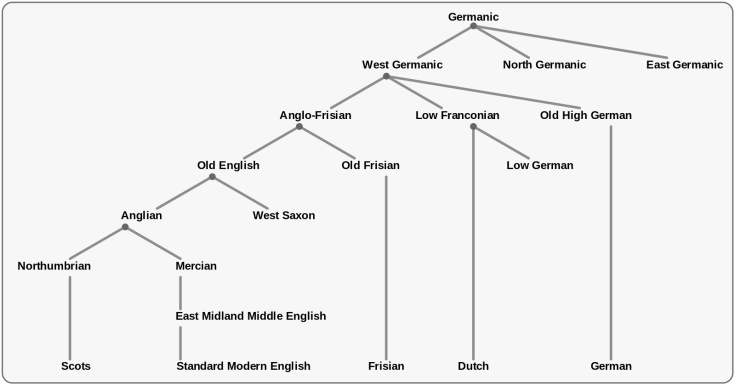
To recap, English is a West Germanic language that originated from the Anglo-Frisian dialects brought to Great Britain starting in the 5th century. Because it is West Germanic, English is closely related to other Northwest European languages such as German, Dutch, and Frisian. Due largely to British conquests and the expansion of the British Empire starting in the 1500s, today you can find English speakers in virtually every corner of the world.
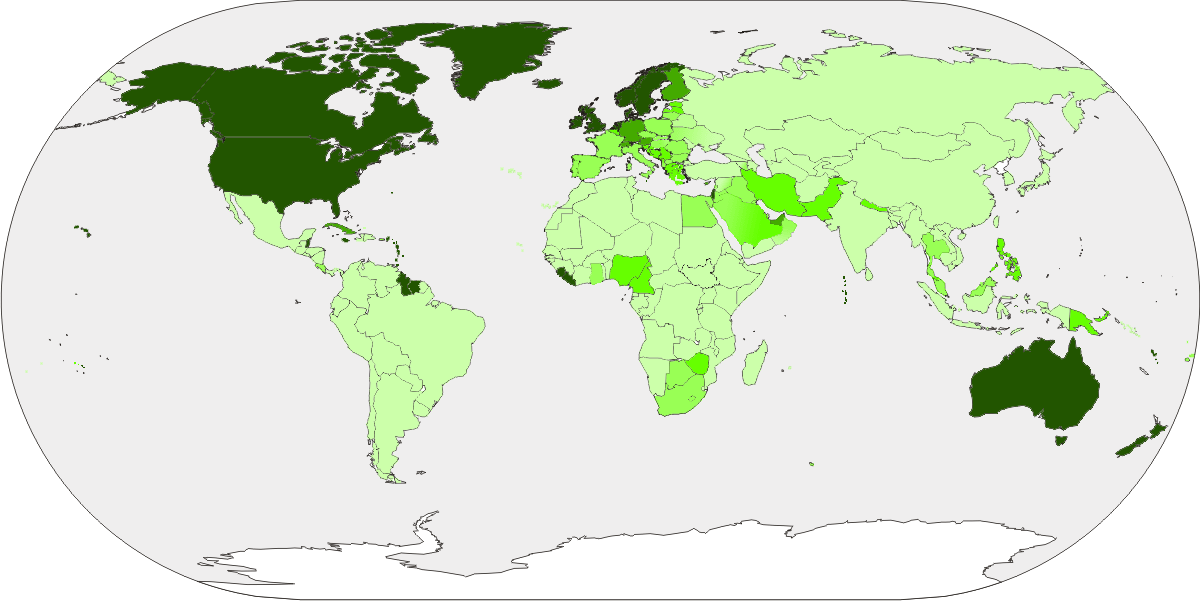
English is an official language in 54 countries around the world, and a de facto official language in dozens more including the United States of America. According to Enthologue, English is the most spoken language in the world if you count native and second-language speakers, and it is spoken by 1.1 billion people. That means that 1 in every 7 people on Earth speak English to some degree.
On those numbers alone, if we’re trying to determine whether or not English should be the international language, this data alone says that it should. Since English is already so widespread and it has already brought together so many people of different backgrounds, it would only make sense that English becomes the Official International Language.
English: The Obvious Choice for International Language?
 In addition to being the most widely spoken language in the world, there are additional reasons for why English should be the official international language. For example, English is also the international language for business. According to NationMaster, if we look at GDP figures, the Anglosphere, or countries that have English as an official or de facto official language, accounts for $22.11 trillion dollars or 25% of the global gross domestic product. Further, this number doesn’t account for the other 70-some-odd countries where English is also co-official or de facto official, but this number proves that English is the language of business, and that English-speaking countries drive the global economy.
Aside from the fact that English dominates the world market, on a more personal and practical level, having English as an official international language would effectively end miscommunication between speakers of different languages and do away with the need for people to learn other languages or have to bother with translating. Besides, 56% of the internet is in English and almost 80% of all stored information is in English as well. Can you imagine how much easier scholarship or travel or business would be if we all just spoke English? Think of how much time and energy could be saved!

Why English Shouldn’t Be the Official Language of the World
Now, if you watch my channel or read my blog often, I hope you have picked up on the fact that I don’t actually believe that English should be the official international language. Sure, there are some pretty compelling reasons, but I sure as heck wouldn’t waste so much time learning and talking about foreign languages if I didn’t see the value in doing so.
So, why don’t I think that English should be the official international language?
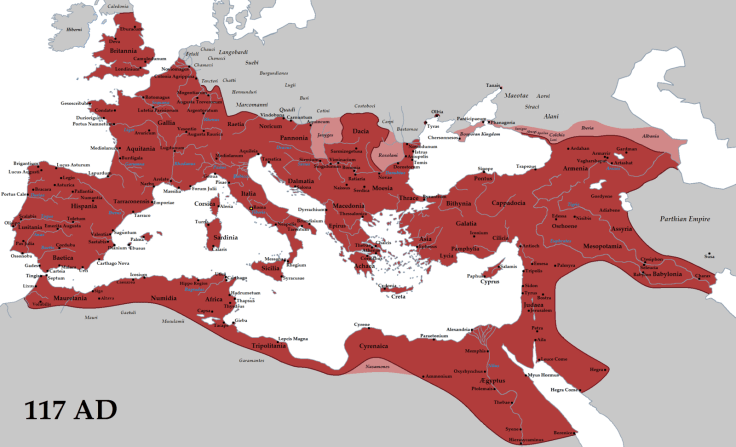
First of all, if you know anything about history, you know that empires rise and empires fall. If we look back at Europe in the year 117 CE, we see the Roman Empire at its greatest extent. During that time, large groups of people from different linguistic and cultural backgrounds spoke Latin either natively or as a second language. Fast forward 1900 years, and we can see that Latin is little more than a clerical language. It is essentially dead even though technically it evolved into the Romance languages we know today.
So, what does this have to do with English?
What I’m trying to say is that the Roman Empire once dominated a large chunk of the world, but it inevitably collapsed. One day, and I have no real reason for thinking this because I can’t see into the future, the Anglosphere or the dominance of the English language will probably end as well. And when it does, English will become obsolete and undesirable, and a new language will take its place, and humans hundreds or thousands of years from now will be having a similar discussion about the world’s new lingua franca.
Now, that is hardly a reason for why English can’t be the official international language today, but there are other reasons. I believe that neither English nor any other language for that matter should be the world’s official language because it would effectively end linguistic diversity and lead to huge amounts of language death. I know it’s easy to think that language death isn’t a big deal, but for me, language death isn’t just about a language ceasing to exist: I believe it is also about losing a culture and a unique way of thinking.
We know that language impacts the way we interpret and conceptualize the world, and we know that language and culture are very strongly linked. If English became the international language, we would see language death on a large scale, and to an extent we already are, and I think it is a terrible reality for people who will inevitably lose links to their identity and their past if they adopt an English-only attitude. Personally, I know that I lament the fact that I don’t speak Italian natively because my family abandoned teaching it to us kids in favour of us learning English, and I shudder to think what would have happened if Italian had died by the time I wanted to learn it.
Related: Where Did Language Come From? (The Origins of Language)
Lastly, I also believe that English should not be the official world language because of its past. Now, I know I’m going to be labelled a snowflake and a social justice warrior and bleeding-heart liberal for saying this, but in my opinion, English’s colonial past effectively makes it the language of the oppressors as with many other European languages. The point I’m trying to make is that by dictating that English should be the official world language, we would just be continuing the ongoing legacy of colonialism by indirectly forcing people to abandon their native languages and ultimately parts of their culture to make it more convenient for those of us in positions of power.
Now, I don’t mean power in the sense of political power, I just mean that by having people in positions of power (i.e. English speakers) dictating to others (i.e. non-English speakers) that they must speak only English, we are no better than colonists who stole and killed and created a system that forbid the world’s Indigenous peoples from speaking and using their native tongues in the first place.
Whew, that got a little heavy.

I’m interested in your thoughts. Should there be an official international language? Should that language be English? Let me know in the comments below. Remember: this is a touchy topic for a lot of different people for a lot of different reasons. Please be sensitive to that. Be a nice person.
 The Polyglot Files
I think that the differnt languages are beautiful and to kill them off would be throwing away so many different cultures. I come from spanish speaking family and I don;t know what they’re saying half the time but that just makes me want to learn it more, sometimes I do wish that we spoke the same language to avoid this confusion but there are some things you can’t get from a translation or putting it into new words. There’s this word in Hebrew, I wish I could remeber it now but the only way the guy who told me it was able to describe it was an explosion of joy. English couldn’t deliver the same meaning to the word and that’s why we need different languages, it’s like when someone says vióla. It’s like saying ‘ta da’ but more if that makes sense. Or prego, there’s no direct translation in English. It would be a crime to lose such beautiful sounding languages like Italian or French or Spanish, so many songs and poems and pieces of art that snowballed into the culture we have today, opera, salsa, flamenco, french cheese (that’s all i could think of), the freaking guitar would be useless without them. And the Asian languages too, their symbols, the way you need to have your pronunciation perfected or what you said would be gibberish, their unique cultures, origami, The Great Wall, the architecture of their historic buildings. My grandpa says that he wishes he could speak English as well as my sister and I but I wish I could speak Spanish like him or Italian like my Nono or Japanese like my friend. Long story short, we need the different languages for the culture, the history and the overall beauty of the world. Because what’s a world without its differences?
LikeLike
But having an international language doesn’t mean the other languages will disappear. There can be an universal English used for media and international communication while other languages will keep being spoken and written in their countries and regions. Basically English would be used to communicate with the world and access the shared knowledge and information while the local languages would be used in their respective places.
Does it have to be English? Not necessarily, I’d personally prefer an artificial language but right now English is the best option for its established ubiquitousness. The best alternative is machine translation, but it hasn’t been perfected yet and it’s unknown when it will happen or if it’s going to happen at all.
LikeLike
Why focus exclusively on the colonial legacy? English is also the language of human rights, of modern medicine and of the technological era. For the first time in human history knowledge is being distributed democratically through the internet, and humans have unprecedented learning opportunities in the English language thanks to the actions of a few countries. Are the actions we take today voided by the actions taken two centuries ago?
LikeLike
I guess there should be a sort of “co-official” language. And it should be english. That means, internationally, english would be learned as a second language by children since they’re learning to speak their first words, it would be much easier to communicate with other people abroad, I’m not a native english speaker, my native language is portuguese, but here in my country, there are only a few people who can speak english in a “good level”, because they start to learn it when they’re older, sometimes they don’t even learn it.
Other languages would only be spoken when talking to people who were born in the same country as the speaker, and worldwide, the communication would be much easier.
LikeLike
I guess there should be a sort of “co-official” language. And it should be english. That means, internationally, english would be learned as a second language by children since they’re learning to speak their first words, it would be much easier to communicate with other people abroad, I’m not a native english speaker, my native language is portuguese, but here in my country, there are only a few people who can speak english in a “good level”, because they start to learn it when they’re older, sometimes they don’t even learn it.
Other languages would only be spoken when talking to people who were born in the same country as the speaker, and worldwide, the communication would be much easier.
LikeLike
English isn’t going to fade as did Latin for the simple reason it is too entrenched in every corner of the globe. The use and knowledge of English is accelerating and nothing will slow it down. P.S. In regard to colonialism, most former colonies of England are grateful that the English left their language. First, English linguistically unified the countries where numerous tribal languages are spoken — like Nigeria. Second, the economic advantages to be gained from an English speaking population are incalculable.
LikeLike
i need to do homework about this aaaaaaaaaaaaaa
LikeLike
False dilema. You can learn both English as international language and also the local language.
English language should be international because practicality. Is easier to use a language that 2 billion people speak it or some extant rather than start from zero with some kind of Esperanto. Second , English sound ok to the ears. Is not harsh, weird,screeching .
LikeLike
I do believe that English is the perfect universal language of choice
LikeLike
Hi, the reason I found your page is because I asked my browser why English is not already the main language everywhere. Over here in Singapore and Malaysia, both once British colonies, English is the language of choice. We have many races with their own mother tongues so conversing with one another is easier with English. People who didn’t know English used to learn Malay to soeak to Malays and Indians. In Singapore we had such a thing as being English stream or Chinese stream in education, with the latter losing out on jobs, so eventually education became only English stream. I worry for Malaysia because the standard of English is dropping, partly because the Malays might feel it’s easier to study most subjects in Malay, and the rulers may have flip flopped between English and Malay for education. Still, they have a huge advantage in welcoming foreigners or investments compared to places like Thailand Vietnam and even Korea because hardly anyone there volunteered to speak in English. I’m sure there are people there who had studied some English in school. Now instead of emphasizing on rather useless things like ai, i think the fastest way for the world to advance is to teach one another English, whether we are natives or not. I’m Chinese by the way and I won’t miss the Chinese language if it were gone because its just too cumbersome to learn. We have to memorize the sounds of every character and at times we feel illiterate in our own language. Not so with English as we can read new words easily and look them up on the web. I’m an engineer by training and i know that the best technology is written in English. So I encourage the whole world to embrace and spread English.
LikeLike
there should be one world language and one world government if we want to finish the human problem’s
LikeLike
I believe the concept of one global language in reality is dangerous. English, effectively gives a handful of nations, a global monopoly on language, which is quite powerful. Given the fact that global technology platforms originate from the United States it also gives the United States a great deal of power over other nations. Apart from the fact that it makes people intellectually lazy, to kill off 90% of the world‘s languages within 100 years will change how people think and conceptualize the world. I do not believe that English should be the de facto language as it also creates scenarios where people are cast into classes by the language of their home country. The fact that people are conceptualizing, an ideal of one global language also shows the intellectual laziness of humanity in modern times. I believe there should be a core group of global languages to be used and put into place as system of checks and balances and too slow and prevent further advancement of linguistic colonialism and imperialism.
LikeLike